
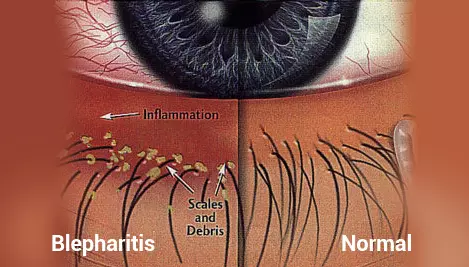
The Two Main Types of Blepharitis
Blepharitis is generally categorized into two types, depending on where the inflammation occurs, though it is possible to experience both simultaneously:
- Anterior Blepharitis: This occurs on the outside front edge of the eyelid, where the eyelashes are attached. It is most commonly caused by a bacterial infection (Staphylococcus) or skin conditions like seborrheic dermatitis (dandruff of the scalp and eyebrows).
- Posterior Blepharitis: This affects the inner edge of the eyelid that makes contact with the eyeball. It is typically caused by dysfunction in the meibomian glands (the tiny oil glands situated in the eyelids), which can become clogged. Skin conditions like ocular rosacea are frequently linked to this type.
Dandruff like crusts can appear on your eyelashes. Blepharitis is a chronic condition, meaning that once it develops you will probably have repeated episodes. There is no cure however, there are a range of treatments that can control the symptoms.
The most important one is to establish a daily eye cleaning routine. Complications of Blepharitis include:
- dry eye syndrome (where the eyes do not produce enough tears or dry out too quickly),
- styes (a pus-filled swelling in or on the eyelid),
- meibomian cysts (a meibomian cyst is a swelling that occurs in the eyelids. They can happen when one of your meibomian tear glands gets inflamed) and
- conjunctivitis (inflammation of the eye).
The condition is not normally serious. Serious complications such as sight loss are rare, especially when you follow the recommended advice.