
021 434 1030
Eye Surgery

Cataract Surgery

cataract surgery
cataract surgery

What is Cataract Surgery?

Cataract surgery is a medical procedure used to treat cataracts, which are the clouding of the normally clear lens of the eye.

The surgery involves removing the clouded lens and, in most cases, replacing it with an artificial one to restore clear vision.

The lens of your eye bends (refracts) light rays that come into the eye to help you see

Your own lens should be clear, but with a cataract, it becomes cloudy. Having a cataract can be like looking through a foggy or dusty windshield. Things may look blurry, hazy, or less colorful. The surgery removes this barrier to restore normal vision.

How It Works

  • Preparation: The eye is numbed with eye drops or an injection around the eye so you do not feel pain. You are usually awake during the procedure.
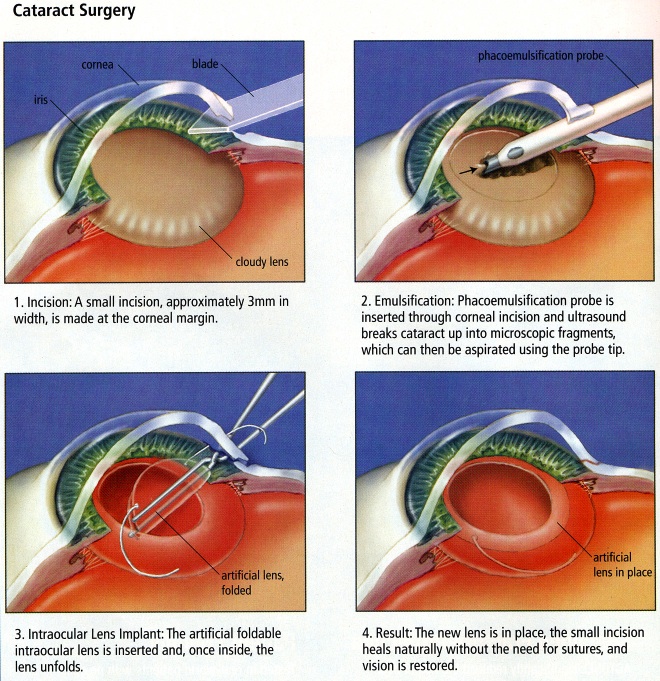
  • Removal: The eye surgeon makes a tiny incision in the front of the eye (cornea). They use a small tool to break up the clouded lens and suction it out.
  • Replacement: Once the natural lens is removed, an artificial lens, called an intraocular lens (IOL), is implanted in its place. This new lens is clear and is shaped to fit your eye perfectly.
Cataract surgery is an outpatient procedure, meaning you go home the same day. It is one of the most common and successful surgeries performed worldwide. Most people notice a significant improvement in their vision within a few days, experiencing sharper focus and brighter colors.
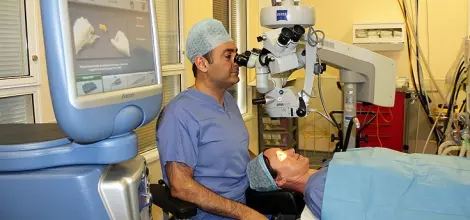
Cataract surgery is performed as a day case procedure.

The cataract is removed by a surgical technique called phacoemulsification.

The cataract is replaced with a permanent artificial lens implant. This surgery is carried out through a very small incision which reduces healing time and speeds up the visual rehabilitation of the eye.


 cataract surgery

Surgery is carried out under topical anaesthesia and is completely needle-free.

Anaesthetic drops are used to numb the eye with no local anaesthetic injections required.

Topical anaesthesia is free from side effects associated with other forms of local anaesthesia and has the added advantage of no disruption to the patients’ anticoagulation treatment (there is no need to stop Aspirin or Warfarin).

 A general anaesthetic is also available when indicated or preferred by the patient.

The majority of patients are in the hospital for only 2 to 4 hours on the day of their surgery. Surgery is very quick (15-20 minutes) and painless for the patient. 

The patient is discharged once fully recovered.

Cataract surgery is regarded as a very safe procedure and major sight-threatening complications are very infrequent. However, as with any surgical procedure, there are risks associated with cataract surgery which can include:
  • Infection
  • Bleeding inside the eye
  • Increased pressure inside the eye (Glaucoma)
  • Swelling of the retina
  • Swelling of the cornea
  • Retinal detachment
  • Loss of vision (partially or completely)
     

In some cases, the part of the lens covering that supports the IOL (called the capsule) can become cloudy several months or years after the first cataract was removed. This is called an "after cataract" or "secondary cataract." If this occurs and blurs your vision, Mr Golchin will make an opening in the centre of the cloudy capsule with a laser to allow light to pass through the lens properly again. This procedure called a posterior capsulotomy takes about five minutes and requires no recovery period.

Diet - Normal diet.

Medications - Please administer the postoperative eye drops as instructed. Resume normal medicines.

Activity Guidelines -

  • Wear the eye shield supplied for one week after the surgery at night to avoid rubbing the eye while you sleep.
  • Do not swim for at least 2 weeks.
  • Avoid vigorous exercise for at least 2 weeks.

Follow-up

You will be given a review appointment for follow up

  • To date, Mr Golchin has performed over 15,000 cataract surgeries.
  • Our in house cataract audit reveals that over 85% of patients Mr Golchin has operated on do not require glasses for driving or distance vision post surgery. 
  • Best vision is usually achieved once both eyes have been operated on.

What Our Patients Say

View All
" Like looking through a misty pane, Everything seems drab and grey, Then Mr. Golchin's skillful hands, Opened the door to a clearer land. Dust and cobwebs, now I see, Passing spiders wink at me! Wrinkles on my face and neck - Heavens above - I look a wreck! But I can see bright colours, Little birds upon the trees And hills and distant valleys, That for long evaded me. How wonderful the advances made in medical R and D, And Mr. Golchin's gifted hand, That restored good spirit to me P. Barry
Loading…
Loading the web debug toolbar…
Attempt #